Cavitation and flashing in control valves occur only with liquid media, and the
principal factors responsible are fluid velocity and pressure drop.
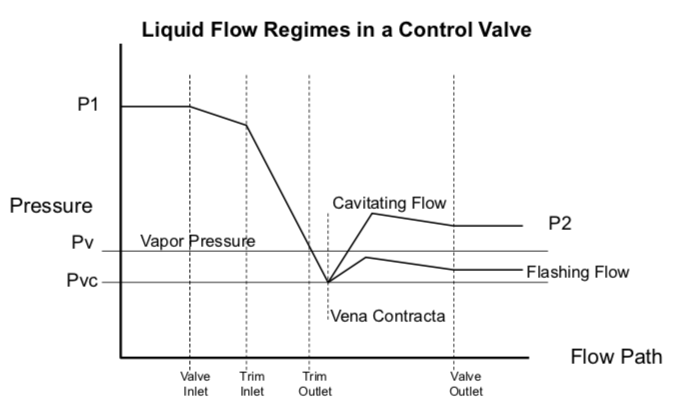
If upstream pressure is just above the vapor pressure, then the pressure may drop
below the vapor pressure as the fluid flows through the valve.
Cavitation will occur if the pressure recovers downstream of the valve to a pressure that is once again above the vapor pressure.
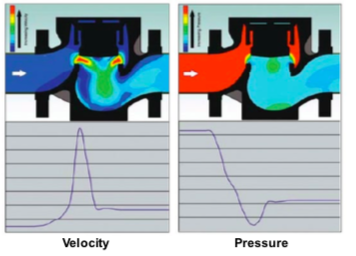
Cavitation damage is a form of hyper-erosion that can destroy both control valves and piping, which can result in unacceptable process failures.
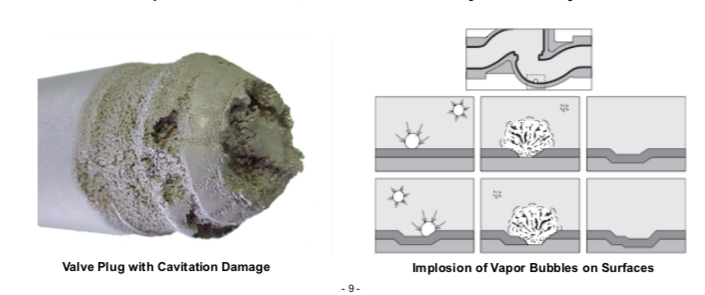
The vapor bubbles created as a result of a pressure drop will implode – nucleate, grow, collapse, and rebound – as the vapor returns to liquid form.
The implosion of vapor bubbles in the cavitation phenomenon inflicts damage in the form of small pits in the metal, which cumulatively wear away surfaces.
Similarly to cavitation, if upstream pressure is just above the vapor pressure, then the pressure might drop below the vapor pressure as the fluid flows through the valve.
Unlike cavitation, however, flashing will occur if the pressure does not recover downstream of the valve, but rather remains below the vapor pressure.
In flashing service, the pressure drop will result in the process flashing from a liquid form to a gaseous form, carrying with it the liquid droplets at high velocity through the valve trim and into the downstream piping.
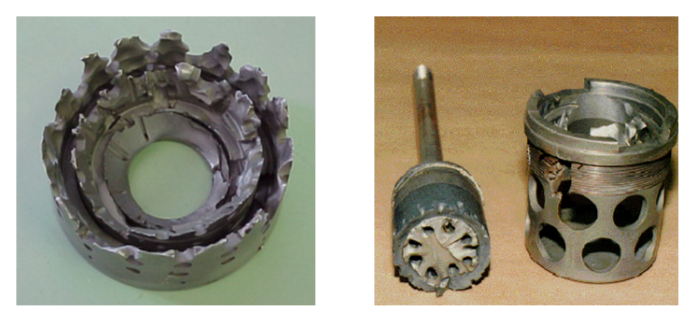
Flashing damage is characterized by scalloping of the metal parts within the valve.
 KOMOTO AO-3607 DN150 Control valve maintenance servicesKOMOTO AO-3607 Control valve maintenance servicesTKLD Control Valves ServicesBall Valve Maintenance ServicesGate Valve Maintenance ServicesControl Valve Severe ServiceGlobe Control Valve Maintenance ServicesOn-Off Valve Maintenance ServicesKOMOTO AO-3841 Control valve maintenance servicesKOMOTO AO-3811 Control valve maintenance services